
Bleach vs Colour Remover: Which One Do You Actually Need?
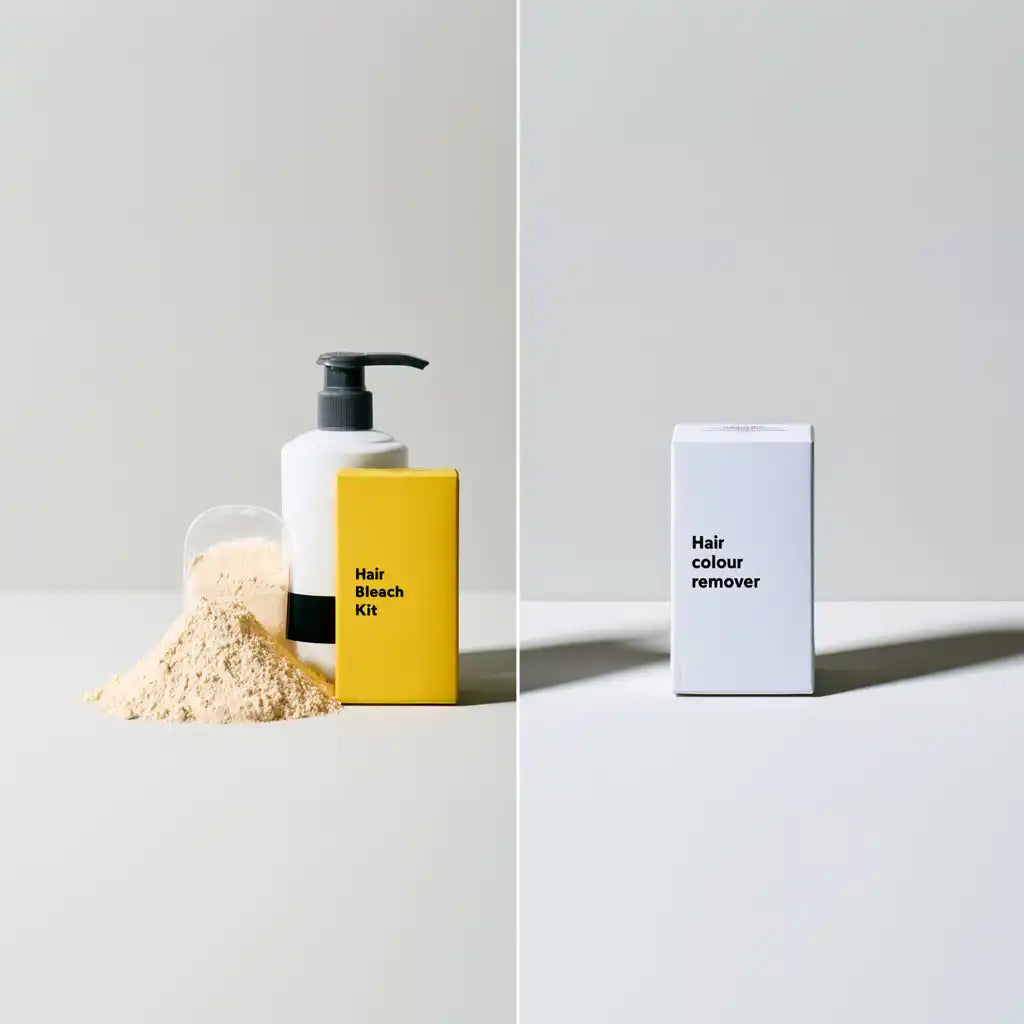
They sound like they do the same thing — but bleach and colour remover work completely differently. One removes artificial dye molecules; the other removes your natural pigment. Choosing the wrong one is one of the most common (and costly) hair mistakes. Here's how to tell them apart.

If you've ever googled "how to go back to my natural hair colour" or "how to remove semi-permanent dye before bleaching", you've probably seen both bleach and colour remover come up as solutions. And it's easy to assume they're interchangeable — they're both chemicals that change the colour of your hair, right?
Not quite. They work in completely different ways, target different things, and produce very different results. Using the wrong one won't just fail to work — it can leave your hair more damaged or more difficult to colour than before.
Here's exactly what each one does, when to use each, and when you might need both.
What Is Hair Bleach?
Bleach is a chemical lightener that removes pigment from your hair — specifically, it breaks down the melanin in your hair shaft. Melanin is your hair's natural colour pigment (the stuff that makes your hair brown, red, black, or blonde).
When you apply bleach with a developer (peroxide), a chemical reaction oxidises the melanin molecules, breaking them down and leaving your hair progressively lighter. The bleach doesn't care whether that pigment is natural or from a previous permanent dye — it attacks all melanin in the hair shaft.
- What bleach is for: Lightening your hair — whether from natural pigment or permanent dye — to create a light enough base for vibrant colours, pastels, or platinum blonde.
- What bleach does NOT do: Remove artificial semi-permanent colour molecules from the hair. Because semi-permanent dyes coat the outside of the hair rather than penetrating the shaft, bleach largely bypasses them and works on the underlying pigment instead.
What Is Colour Remover?
Colour remover (sometimes called colour stripper or dye remover) works on an entirely different principle. Rather than oxidising and destroying pigment, it works by shrinking the artificial colour molecules inside the hair shaft so they're small enough to be washed out.
The key word there is artificial. Colour removers only work on oxidative (permanent) hair dye that has been chemically bonded inside the hair shaft. They are largely ineffective on:
- Semi-permanent hair dye (which sits on the outside of the hair)
- Natural hair pigment (melanin)
- Direct dyes like those found in fashion colours
- What colour remover is for: Removing permanent hair dye — for example, if you dyed your hair dark brown permanently and want to get back to a lighter base without bleaching.
- What colour remover does NOT do: Lighten your natural hair colour, or effectively remove most semi-permanent or direct dyes.
Bleach vs Colour Remover: Side-by-Side
| Hair Bleach | Colour Remover | |
|---|---|---|
| What it targets | Natural melanin pigment | Artificial (permanent) dye molecules |
| How it works | Oxidises and destroys pigment | Shrinks artificial colour molecules for washing out |
| Works on semi-permanent dye? | No (mainly bypasses it) | No (semi-perm sits on the cuticle) |
| Works on permanent dye? | Yes | Yes |
| Works on natural hair colour? | Yes — lightens it | No effect on natural pigment |
| Hair damage level | High — significant structural stress | Low — gentler process |
| Result | Lighter hair (potentially platinum) | Returns hair closer to pre-dye colour |
| How light can it go? | Up to 7+ levels with 30 vol developer | Only removes dye — won't go lighter than natural |
Which One Do You Need? Common Scenarios
"I want to go from dark hair to a vibrant colour like blue, pink, or purple."
You need: Bleach.
Semi-permanent fashion colours need a pale base to show up as intended. Your natural dark pigment will overpower any vibrant colour applied on top. Bleach is the only way to create the light canvas you need. Read more about why bleaching before semi-permanent dye makes such a difference.
"I used permanent dark brown dye and want to go lighter."
You need: Colour remover first, then possibly bleach.
If your natural hair is light but you've dyed it dark with permanent dye, a colour remover can strip out that artificial colour and take you back towards your natural base — without the damage of bleach. Once the dye is removed, assess how light your hair is. If you still need to go lighter, you can bleach afterwards.
"I used semi-permanent dye and want to remove it before bleaching."
You need: Bleach (colour remover won't work on semi-perm).
Semi-permanent dyes like Stargazer's range are direct dyes — they coat the outside of the hair rather than penetrating the shaft. Because colour removers work on the inside of the hair shaft, they largely pass straight through without touching semi-permanent molecules.
If you want to bleach over semi-permanent colour, you can — but stubborn pigments (especially dark blues and greens) can affect your final bleach result. Waiting for the semi-perm to fade over 6–8 washes, or using a clarifying shampoo, is often the better first step.
"My hair has been bleached and I want to go back to a natural colour."
You need: Neither — use a permanent or semi-permanent dye.
Bleached hair has had its pigment removed, so there's nothing for colour remover to work on. To go back to a natural-looking colour, apply a permanent or semi-permanent dye in your desired shade. A toner or semi-permanent in a neutral brown can create a surprisingly natural result on bleached hair.
"I want to go from naturally dark hair to platinum blonde."
You need: Bleach — and patience.
Very dark or black hair typically needs multiple bleaching sessions spaced 4–6 weeks apart to reach platinum without causing severe damage. There's no colour remover shortcut here — natural melanin doesn't respond to colour remover at all. Read our full guide on going from black to platinum blonde.
Can You Use Both Together?
Yes — and for some hair journeys, using both in sequence is actually the smartest approach.
If you have permanent dye on top of your natural colour, start by using a colour remover to strip the artificial dye. This takes the hair back towards its natural base, and you'll be working with less pigment when you bleach. Less work for the bleach = less damage.
Never use colour remover after bleaching — there's no artificial dye left to remove, and it won't have any useful effect.
A Note on Semi-Permanent Dye and Bleach
Since Stargazer dyes are semi-permanent, the question we get most is: Can I bleach over Stargazer hair dye?
The answer is yes, but with caveats:
- Lighter colours (pastels, yellows, soft pinks) will generally not interfere much with bleaching.
- Deeper, more saturated colours (dark blue, black, forest green, intense purple) can be very stubborn and may bleed into the bleach result, creating unexpected tones.
- If you have heavy pigment from a darker semi-perm shade, letting it fade over 6–8 washes before bleaching will give you much cleaner results.